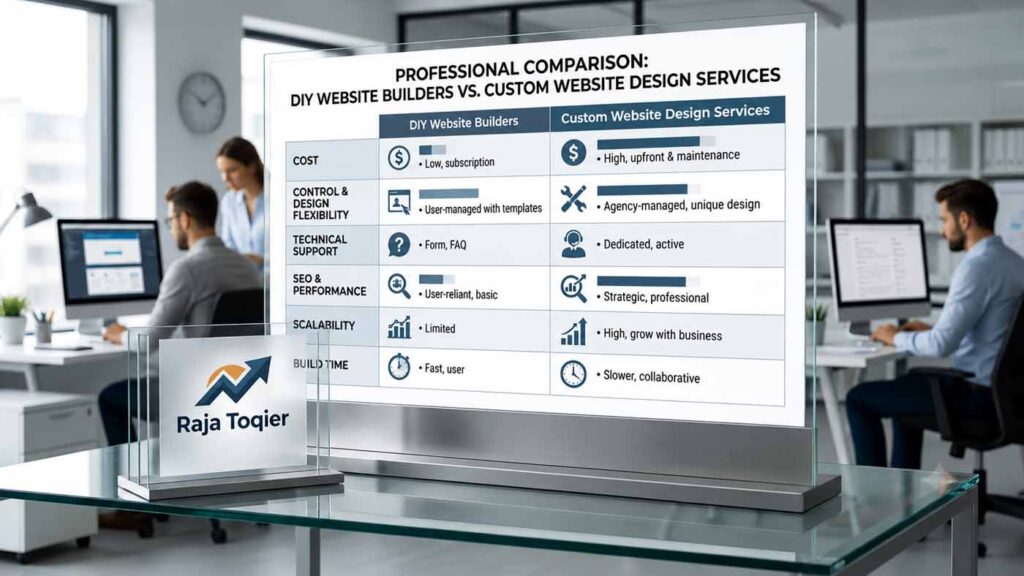
The short answer is: DIY builders are best for small businesses with simple needs. Tight budgets and basic design skills, while custom website design suits businesses that need strong SEO, unique branding, and room to scale. Let your budget, your technical comfort, and your growth plans be the guide to the decision.
Many entrepreneurs start out by asking themselves, Should I design my own website? Website builders with drag-and-drop tools have made it easier than ever to launch a basic site without technical skills. Below. We break down when DIY makes sense, when it falls short, and how to know it’s time for a more strategic approach.
Should You Design Your Own Website with a DIY Builder?
DIY platforms have transformed how small businesses get online. Tools such as WordPress.com allow you to select a template, drag items into position, and publish a working site in an afternoon without writing a single line of code.
Use a DIY Builder If You Need a Fast, Low-Cost Launch
It makes sense to do it yourself when:
- You’re testing a new business idea and need to get online quickly
- Your budget is limited, and you want to avoid upfront design costs
- Your site only needs a handful of basic, static pages
- You’re happy to manage ongoing updates and maintenance yourself
What Are the Hidden Challenges of Designing Your Own Website?
DIY website design may seem easy at first. But templates can be limiting for customisation, AI website builders can lack the strategic depth needed for user experience (UX), branding, and search engine optimisation (SEO), and many platforms produce bloated code that can slow down load times and affect search rankings.
Watch Out for These Common DIY Pitfalls
- Generic, template-based designs that make it hard to stand out
- Slow page speed due to bloated, non-optimized code
- Bad technical SEO base that won’t let you be found in search results
- Hard to add advanced features as your business grows
We can help you to go beyond these limits if you’re already facing them with our Custom Website Development services.
When Should You Switch from DIY to Custom Website Design?
As your business grows, DIY sites often show their cracks. Custom website design is built from the ground up around your specific goals, giving you the scalability, flexibility, and advanced functionality a template can’t offer.
Move to Custom Development When These Signs Appear
- Your current site can’t support new features, integrations, or growth plans
- You need a design that represents your brand identity
- Your SEO performance has stalled despite your best efforts
- Prepared to opt for long-term results over short-term savings
Consider your budget, goals, technical skills, and future growth needs when making your choice. Learn more about how a custom solution can help your business on our Custom Website Design page.
How Can You Scale Your Website from a One-Page Site to a Full Build?
You don’t have to choose “basic” or “fully built out” on day one. A phased approach lets you get to market quickly, collect feedback, and scale strategically.
Follow These Steps to Grow Your Website Over Time
- Create a simple one-page site to get an online presence and test your messaging
- Bring in real visitors and customers to provide feedback before you spend any more money
- As your offering becomes clearer, add core pages such as services, about, and contact.
- Anticipate more traffic, listings, and customer interactions as you grow
If you’re ready for that next level. Take a look at our Small Business Website Design and Ecommerce Website Design services.
Why Does SEO Matter No Matter How You Build Your Website?
A beautifully designed website is ineffective if potential customers can’t find it. If you build your own website or pay for a custom build, search engine optimisation (SEO) determines whether your site gets seen in the first place.
Build a Strong SEO Foundation with These Core Strategies
- On Page SEO Services Boost Content with Appropriate Keywords
- Technical SEO Services Boost crawlability and site speed
- Build a strong and relevant backlink profile over time.
Want to learn more about making your site discoverable? Head over to our Search Engine page.
DIY Website Builders vs. Custom Website Design: Which Is Right for You?
| Factor | DIY Website Builder | Custom Website Design |
| Cost | Low upfront cost | Higher upfront investment |
| Setup speed | Very fast, often same-day | Longer build and planning process |
| Customization | Limited to template options | Fully tailored to your brand and goals |
| SEO potential | Often limited by bloated code | Built with technical SEO in mind |
| Scalability | Difficult as needs grow | Designed to scale with your business |
| Best for | Startups, very small businesses, quick tests | Growing businesses focused on long-term performance |
Making the Right Choice for Your Business
The issue of designing your website isn’t one-dimensional. You need to consider your available resources, future plans, and capacity to undertake complex tasks. The do-it-yourself web builders present an easy way out. But in case of growth, there’s no alternative to having a custom website designed. No matter which path you opt for, keep in mind that your website will be one of your most valuable properties.
Frequently Asked Questions
Yes. Current DIY website builders use drag-and-drop editors and pre-built templates, so you can create a basic website without writing any code.
There’s no denying that an independently designed website can achieve high rankings. But many web designers create sites with excessive code, making them load slowly and limiting their technical SEO.
It may be time to think about custom website development if your existing website doesn’t allow you to include new features. Lacks brand identity, or its SEO efforts seem to have stalled.
Yes. A good starting point will be a one-page website. Here’s the thing: if your company grows, you’ll be able to create additional pages until finally deciding on custom web development.
When considering the needs of a growing business, custom website design usually makes sense for performance, brand identity, and SEO.